Wednesday, March 18, 2015

The Top Ten Things I Learned From Planning My Wedding

I apologize to my loyal readers that I have not written in almost a year. In fact I may not have written since I was 26, and now I am almost 28! But as you may also know, most of my 27th year was dedicated to the planning and experiencing my wedding. Now I'm back and I have a lot to tell you.


Here are the top ten things I learned from planning my wedding.

1. Planning a wedding will take over your life. Towards  the end of our engagement, a month or two out, wedding planning was literally all I could think about. I struggled to even put thought into actually getting married or what would happen afterward. If it wasn't for Ron I probably wouldn't even have managed to pack for the honeymoon. I'm amazed that I never left the house without any pants on. That's how much I was thinking about wedding planning.

2. Weddings are expensive. Let's just get that one out of the way right now. Set a Budget, and then set a More Realistic Budget and then set a We Absolutely Cannot Go Over This Budget. Some people spend $5,000 and some people spend $50,000. No matter what your budget is, realistically look into what it is you want and how much that is going to cost. Then cut those fourth cousins from the guest list.   

3. Throw money at it. Leave room in that We Absolutely Cannot Go Over This Budget for last minute issues that no one can possible prepare you for. Like when I ruined my pedicure hours after getting it: $60 down the drain. Or when we realized our ceremony backdrop was literally PVC pipe and we had to purchase a last-minute bolt of tulle: another $30. Not sure if your reception space has enough lighting? Throw money at it. Not sure if two choices of craft beer will be enough? Throw money at it. You can't second-guess yourself at this point; you just don't have the mental capacity. So make sure your bank account has the financial capacity.

4. Everyone has an opinion on something. The best people in your life will say that it is your day and all they want is for you to be happy. I hope that this is everyone in your life and especially in your bridal party. But even those wonderful, supportive, best people will have an opinion on SOMEthing. Your mom suddenly thinks you should go with ivory linens. Your bridesmaid suddenly doesn't have the complexion for gold jewelry. Everyone will say they have no opinion, until that one thing comes up that they do care about. Be ready.


5. Expect the unexpected. This also relates to #4. Some people in your life will step up in a way you never imagined. Some people who you thought were your biggest supporters will make you want to un-invite them. The dress you always dreamed of wearing might make your hips look huge, and getting married on a beach might suddenly sound like a sandy disaster. You can't really prepare yourself for this situation until you're actually in it; accepting that is the best way to prepare yourself.

6. Wedding planning is a testament to how much stress your relationship can stand. I know that there were times Ron thought I was absolutely crazy. And I may have thought that he wasn't helping enough or didn't think the wedding was important enough. But no matter how stressed or angry I was, he was the one person I could stand to be around. Not to mention the stress of paying for it all together (see #2). This is another reason why I will always recommend taking your honeymoon immediately after your wedding. You need time to reconnect, and time to celebrate the fact that your marriage has survived its first test.

7. Trends will come and go. This will especially come into play when you are NOT doing things that were once absolute musts. Receiving line, bouquet toss, getting married in an actual church...all things that are suddenly options instead of guarantees. At some point, someone will say, "But you HAVE to HAVE (fill in the blank)."
Our "First Look." Trend? Maybe. Worth it? Absolutely.
But it also applies to things that right now seem like a great idea but in twenty years might make your children say, "Mom, tell me again why you thought mason jars were appropriate for a wedding?" Go ahead and make decisions about what you like now. Just remember that those photos will be around forever.

8. Something WILL go wrong.  Just accept that fact before you even begin planning. You don't know which of the details you spend so much time thinking about won't turn out how you think they will. So you just have to let it go. Here's a list of things that went wrong for us:

  • My maid of honor never made it to the rehearsal because she was picking a guest up from the airport.
  • One of our groomsmen got stuck in Chicago due to a fire at the national air traffic control facility
  • The CD that we had carefully crafted for our cocktail hour never played. Instead there was just silence (and the sounds of people chatting, drinking and having a great time).
  • We ordered purple uplighting and somehow ended up with blue uplighting. 
  • My bathroom basket that I spent approximately two hours and $50 on never made it to the venue
Horrible, right? 

9. But it doesn't matter. Despite all of those truly tragic catastrophes, somehow the show went on. I managed to marry my wonderful husband and everyone had a great time. I doubt our guests even knew about half of those things, or cared about them in the first place. All that really matters is that you get married...but of course if you invite guests it also kinda matters that you feed them and make sure they have a great time too. And they will. No matter what color the linens are.

10. It is the best day of your life. I know, everyone says it. And everyone at some point in their planning says, Screw it lets elope. But at the end of all of the hard work and all of the stress is the best party you're ever going to throw, and possibly the most fun you're ever going to have in one six-hour time frame. Everyone you love will be in one place. And they'll be there to celebrate you pledging your life to the person you love most on Earth. What could beat that?
What did we just do???
I guess I should say, it was the best day of my life so far. Because now I'm married and get to share a million new adventures with my new husband. And of course, I get to share them with you!


Friday, August 8, 2014

The Other Books I Read this Year

Okay so I really dropped the ball on blogging about the books I was reading this summer. Perhaps planning a wedding has gotten in the way of blogging and of life in general. But I DID read 26 books this year. And here they are:

(#1) Read 26 Books
1. Firestarter by Stephen King
2. World War Z by Max Brooks
3. Where Men Win Glory by Jon Krakauer
4. Red Hook Road by Ayelet Waldman
5. A Wolf at the Table by Augusten Burroughs
6. The Fault in Our Stars by John Green
7. Open House by Elizabeth Berg
8. The Golden Compass by Philip Pullman
9. The Subtle Knife by Philip Pullman
10. The Amber Spyglass by Philip Pullman
11. White Noise by Don DeLillo
12. Oryx and Crake by Margaret Atwood
13. The Year of the Flood by Margaret Atwood
14. MaddAddam by Margaret Atwood
15. Where'd You Go, Bernadette by Maria Semple
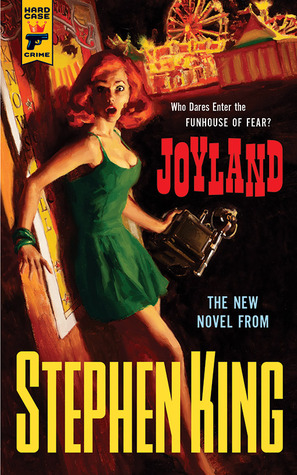
16. Joyland by Stephen King
17. Middlesex by Jeffrey Eugenides
18. If I Stay by Gayle Foreman
19. The Stranger by Albert Camus
20. Flowers in the Attic by V.C. Andrews
21. Lean In by Sheryl Sandberg
22. The Book Thief by Markus Zusak 
23. The Kite Runner by Khalid Hosseini
24. The Five People You Meet in Heaven by Mitch Albom
25. Dear Life: Stories by Alice Munro
26. Freedom by Jonathan Franzen

I read a lot of great books this year, and I read possibly an equal amount of crap. Rather than backtracking and reviewing them all, let me just hit the high and low points.

The winners in the must-read, life-altering category: MaddAddam trilogy, which like all of Margaret Atwood's work will make you question your own present as well as humanity's future. And Middlesex which helped me understand what it is like to be two conflicting people at the same time.

The winner for pertinent non-fiction book with real-world applications: Lean In. (Sit at the table ladies. You belong there.)

The winners in the page-turning category: Where'd You Go Bernadette for the most fun; The Kite Runner for the saddest with the best life lessons; and Flowers in the Attic for the biggest gross-out factor.

The most predictably terrible book award goes to The Five People You Meet in Heaven. Why did I even bother with that one?

And the most disappointingly terrible book that I thought I would enjoy goes to The Book Thief. What a waste of an interesting idea.

And the rest! Sorry I didn't get to review each of them. But I'm looking forward to starting on 27 great new books next year!

Tuesday, July 8, 2014

If I Stay...Through the End of this Book

Okay, fine. It's a young adult book. But as The Fault in Our Stars and The Hunger Games and so many others have proven, you can write legitimate fiction even if it is geared at young adults. This book, wasn't that.

(#1) Read 26 Books
1. Firestarter by Stephen King
2. World War Z by Max Brooks
3. Where Men Win Glory by Jon Krakauer
4. Red Hook Road by Ayelet Waldman
5. A Wolf at the Table by Augusten Burroughs
6. The Fault in Our Stars by John Green
7. Open House by Elizabeth Berg
8. The Golden Compass by Philip Pullman
9. The Subtle Knife by Philip Pullman
10. The Amber Spyglass by Philip Pullman
11. White Noise by Don DeLillo
12. Oryx and Crake by Margaret Atwood
13. The Year of the Flood by Margaret Atwood
14. MaddAddam by Margaret Atwood
15. Where'd You Go, Bernadette by Maria Semple
16. Joyland by Stephen King
17. Middlesex by Jeffrey Eugenides
18. If I Stay by Gayle Foreman


If I Stay is the story of 17-year-old Mia who in the first few pages of the book gets in a car accident with her parents and younger brother. The majority of the novel takes places from Mia's point of view as she lays in a coma in the hospital, watching from outside of her sleeping body. Mia overhears one of the nurses say that doctors have done what they can for her and whether she will live or die at this point is essentially.

She makes her decision based on what her family and friends and oh-so-dreamy boyfriend say to her, as well as through remembering the past and imaging what her future would be like, if she stays.

Obviously this premise requires a certain amount of buy-in from the reader. And I'm all in the supernatural, the paranormal, the question of what happens after we die, whatever you want to call it. But when I'm stretching myself so thin, there is only so much more implausibility I can take. And this book pushes me past my limit.

Most 17-year-old girls are not Julliard-level cello players, for example. There are very few in existence, compared to the general population. Similarly, most 17-year-old girls do not get along so swimmingly with their parents. From page one I was nearly gagging on the sweetness of the love between Mia and her rock-and-roll family.

Most 17-year-old girls also do not have boyfriends who play in bands that are actually reasonably successful. And zero teenage boys would ever consent to naming said band "Shooting Star." That sounds like the name of a band I would make up when I was five. The drummer would be Mr. Bear and the lead singer would be my Fischer Price tape recorder playing "The Wheels on the Bus."

I could perhaps take any one of these points separately. But together it just adds up to bad writing. The characters aren't believable and if I don't believe that they could be real why should I care what happens to them? By the end of this cringe-worthy (harsh but true) novel I could only wish for Mia to make her decision so I could get on with my own life.

I've seen reviews comparing this book to The Lovely Bones. Both (meant to be) unimaginably tragic and heart-wrenching, both narrated by young girls who have become ghosts. The main difference being that The Lovely Bones is actually good. Read that one instead.  

Oh, and I can't wait for the movie.


Monday, July 7, 2014

Middlesex

I feel so many feelings about this book. As Calliope, Callie, Cal goes on an emotional -- and at times physical -- journey, so does the reader. This is one of the best books I have read in a long time, the stunning and Pulitzer prize winning second novel of the writer of another of my favorites, The Virgin Suicides. 

(#1) Read 26 Books
1. Firestarter by Stephen King
2. World War Z by Max Brooks
3. Where Men Win Glory by Jon Krakauer
4. Red Hook Road by Ayelet Waldman
5. A Wolf at the Table by Augusten Burroughs
6. The Fault in Our Stars by John Green
7. Open House by Elizabeth Berg
8. The Golden Compass by Philip Pullman
9. The Subtle Knife by Philip Pullman
10. The Amber Spyglass by Philip Pullman
11. White Noise by Don DeLillo
12. Oryx and Crake by Margaret Atwood
13. The Year of the Flood by Margaret Atwood
14. MaddAddam by Margaret Atwood
15. Where'd You Go, Bernadette by Maria Semple
16. Joyland by Stephen King
17. Middlesex by Jeffrey Eugenides


2187

Our narrator, from the time he is telling the story, is Cal Stephanides. The story is told in retrospect, starting not just from the beginning of Cal's life but from the middle of his grandparents' life. The history aspect can at times be difficult to get through, but by the end you will realize the reason for the epic tale.

Raised as a girl through a somewhat-difficult-to-believe oversight on the part of Callie's doctor, Callie actually has the genitals of both a male and a female. As she grows into a teen, she finds herself to be attracted to other girls- heartbreakingly, to her aloof and fragile best friend "the Obscure Object"- and assumes herself to be a lesbian. After a tractor accident sends her to the ER, Callie's unique characteristics are discovered. Though a specialist identifies her as a female based on certain characteristics, Cal realizes he is a man and runs away to start his new life.

Calliope's journey to Cal is unlike anything I have ever read.  I was amazed at how deftly Eugenides was able to make the character come to life, make him so sympathetic and alive that I was totally able throughout the book to understand the two competing persons within Cal. She was a woman, but he was also a man.

Though at times quite graphic in terms of the physical aspects of Cal's situation, I still felt it was handled with sensitivity and nothing that was included was unnecessary (except, perhaps a few pages of Greek history).

The number of themes examined at length in the book are too many to count (as evidenced, among other places, in the length of its Wikipedia article). Gender identity, of course. Nature versus nurture. The relationship between gender and sexuality. Homosexuality versus heterosexuality. Even emigration and cultural identity. All woven together in a delightfully rich tapestry of a novel full of enough surprises to keep you turning the page.

Admittedly, reading this novel is a "ponderous" undertaking. But I know that my perspective on some of the ponderous issues it addresses has forever been shifted. And to me, that's the mark of a great novel.


Tuesday, May 6, 2014

Joyland: A Stephen King Novel for the Mystery-Lover

I know, I know. Two Stephen King novels in one year. I should diversify. But this one isn't your typical Stephen King "horror" novel; it falls under the genre of "mystery." 

Okay, it's basically a mysterious horror novel. 

(#1) Read 26 Books
1. Firestarter by Stephen King
2. World War Z by Max Brooks
3. Where Men Win Glory by Jon Krakauer
4. Red Hook Road by Ayelet Waldman
5. A Wolf at the Table by Augusten Burroughs
6. The Fault in Our Stars by John Green
7. Open House by Elizabeth Berg
8. The Golden Compass by Philip Pullman
9. The Subtle Knife by Philip Pullman
10. The Amber Spyglass by Philip Pullman
11. White Noise by Don DeLillo
12. Oryx and Crake by Margaret Atwood
13. The Year of the Flood by Margaret Atwood
14. MaddAddam by Margaret Atwood
15. Where'd You Go, Bernadette by Maria Semple
16. Joyland by Stephen King


Joyland is the story of Devin Jones and the summer he spends working at a North Carolina amusement park. Devin visits the resident fortune teller who predicts he will meet two children- a girl with a red hat and a boy with a dog. His journey toward meeting them both is half of the mystery of the book.

The second half of the mystery revolves around the murder of a young girl at the park many years ago, whose ghost now supposedly haunts the haunted house where she was murdered. This being a Stephen King novel, you can expect a spectacularly supernatural reveal and an exciting and highly unlikely twist.

If you are a die-hard Stephen King lover, this will probably not be your favorite. It has more of a whodunit feel. The narrator is more your typical teenage boy than a middle-aged, tormented writer. Not to mention it doesn't take place in his signature small town in Maine.

If you're not big on Stephen King but the sound of an amusement park mystery appeals to you, then give this one a chance. It's only about 200 pages, so it has that going for it at the very least.


Harissa: Spicy Doesn't Begin to Describe It

One good thing about blogging about your experiences is that you get all your readers on your team. Friends have recommended movies or let me borrow books, helped me make pasta, or even just encouraged me and told me how I've encouraged them.

In this case, a friend brought a new food for me to try, all the way from Tunisia.

Try 26 New Foods:

1. Bison
2. Ethiopian Food
3. Oysters Rockefeller
4. Shark
5. Escargot
6. Frog legs
7. Chicken and Waffles
8. Hemp Vodka
9. Uni 
10. Beef Tongue
11. Amaranth
12. Bibimbap
13. Kimchi
14. Harissa


I had never heard of harissa until Chris brought us a can. Even though I figured it was a regional thing to the Middle East/North Africa, I was surprised to learn that it was specific to Tunisia. Harissa is a Tunisian chili paste made from roasted red peppers, hot peppers, and spices. Much  like a good marinara sauce, the recipes vary, but generally include garlic, coriander, cumin, and olive oil.

Ours came in a can and looked a lot like tomato paste.


A quick Google search directed me to this recipe- obviously highly exotic since it gives temperatures in Celsius.

The basic idea was just to rub a little harissa and oil on some chicken breasts, and roast them up with some tomatoes and olives.


The recipe turned out delicious, though the harissa was a bit more spicy than I expected. Luckily I served it with some non-spicy roasted potatoes. Next time, I'd probably use a thinner layer of harissa on the chicken.

The beautiful thing about trying new foods is that there really are things out there that you haven't tasted. That you can't even imagine the taste of. This was one of those things.

It was spicy, yes. It did have a sweet red pepper/tomato taste. It was smoky, likely from the cumin. But there was definitely an indescribable element to it, a depth that was surprising and delightful. I have definitely never tasted anything quite like it and I am excited for the chance to taste it again.

I'm pretty sure we can find it somewhere closer than Tunisia.

Update: Harissa has since been popularized by the fast-casual dining establishment Cava Mezze Grill. I highly recommend trying the restaurant, even if their harissa may be too spicy for you. 


Sunday, May 4, 2014

Where'd You Go, Bernadette?

I'd heard about Where'd You Go Bernadette on a few lists recommending good summer reads for 2013. I didn't get around to it until a bit later, but I'd call it a good read for just about any time of year.

(#1) Read 26 Books
1. Firestarter by Stephen King
2.World War Z by Max Brooks
3. Where Men Win Glory by Jon Krakauer
4. Red Hook Road by Ayelet Waldman
5. A Wolf at the Table by Augusten Burroughs
6. The Fault in Our Stars by John Green
7. Open House by Elizabeth Berg
8. The Golden Compass by Philip Pullman
9. The Subtle Knife by Philip Pullman
10. The Amber Spyglass by Philip Pullman
11. White Noise by Don DeLillo
12. Oryx and Crake by Margaret Atwood
13. The Year of the Flood by Margaret Atwood
14. MaddAddam by Margaret Atwood
15. Where'd You Go, Bernadette by Maria Semple


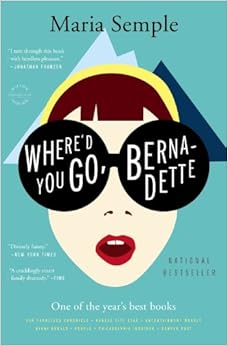
Where'd You Go, Bernadette is the story of an eccentric ex-architect trapped in the world of perfect Seattle soccer-moms. Her only daughter, the genius and sweet-tempered Bee, and her Microsoft executive husband and kind-of-a-big-deal husband Elgin accept her for her eccentricities (such as purchasing a former school for her family to live in as a home), but the same can not be said for the other moms in the neighborhood.

After a series of escalating run-ins with a particularly gnat-like neighbor, Bernadette disappears. The novel is structured in part as a variety of emails and letters that Bee compiles to try and find her mother. A lot comes out in the search that explains some of Bernadette's most odd behavior.

This book was unique, fun and memorable. I don't always enjoy epistolary novels but I thought in this case it worked. There was enough variety and enough depth for me to follow along, and enough mystery to keep me reading.

I hate to say that I could relate to the bizarre Bernadette, but as a fellow artist with occasional eccentric tendencies I could certainly sympathize. And when it comes down to it, she is the best mother that she knows how to be, and her daughter loves her. So that makes it hard to view her as a villian-  at least entirely.

I also enjoyed the look at the private-school parents who were basically what you would expect them to be. And it presented an interesting look at Seattle, told from the perspective of the seemingly only person in the entire city who does not absolutely adore living there.

All in all, I'd recommend this book. It's a great read for the beach or a plane. Or just a rainy day, to get you in that Seattle spirit.


Monday, March 17, 2014

Corned Beef and Cabbage: Boiled Meat Never Tasted So Good

Even though Ron swears I have made this dish before, for a previous St. Patrick's Day, I don't believe him. And even if I have made it, I certainly didn't remember how to make it, so it still counts as a new recipe.

Master 10 New Recipes:
1. Pasta with Mushrooms and Thyme
2. Sriracha Peanut Butter Tofu
3. Fresh Pasta
4. Corned Beef and Cabbage

Corned beef and cabbage is one of those things you probably think you don't like if you've never had it. I mean, its a big hunk of boiled meat. With cabbage, the world's smelliest vegetable.

But if you haven't had it, you should give it a try. Just make sure you are having it the RIGHT way.

First, pick out a good cut at the store.  It will be called "corned beef" and will be pre-seasoned or have a seasoning packet included. The best cut is called a "flat cut." What you are looking for is a lot of fat lines running throughout the entire cut, called "marbling," rather than just big hunks of fat in one area. The safest bet is usually just to go with the most expensive one you can find. Before St. Patty's they will be massively on sale anyway- I think we paid about $6 for three pounds.

Next, do not trim the fat before cooking. I admit I trimmed some of the top fat off of mine, but we are dieting and I felt guilty. But most of it will come right off after it is cooked.

Cut up some onions and line the bottom of the biggest pot you have with them. Put the corned beef on top, add the seasoning packet, and fill the pot with water so the meat is just covered.

Cover, bring it to a boil, reduce to simmer and simmer for about an hour per pound. Just try to ignore the fact that it looks pretty disgusting at this point.


 After 2-3 hours start cutting up your potatoes and carrots. They only take about 20 minutes so add them to the pot when the meat is pretty much cooked. Cook at a simmer until the potatoes and carrots are just tender.
 
While this is happening, cut your cabbage into chunks- quarters or eighths will do.

Remove the meat when it is tender throughout- you may even have trouble getting it out in one chunk at this point. You should be able to pull it apart with a fork and not need a knife. Then add the cabbage in with the other vegetables.


This is why you needed "the biggest pot you can find." Keep stirring and it will cook down.

Trim the fat from the meat while the cabbage is cooking. It should come off pretty easily. Then, serve with the vegetables and a little of the broth to keep it hot.


And enjoy! The texture is somewhat like a tender pot roast, but the taste is tangier and somewhat vinegary. Some people like to make a Reuben-esque sandwich with rye bread, cabbage and Swiss cheese. I like to have mine with a little spicy mustard. But of course there is no wrong way to eat something this delicious.

Corned Beef and Cabbage

Ingredients:

2-3 pounds flat cut corned beef
2 onions
4 medium potatoes
1 lb baby carrots
1/2 head cabbage

1. Slice your onions and line the bottom of the biggest pot you have with them. Put the corned beef on top, add the seasoning packet, and fill the pot with water so the meat is just covered.
2. Cover, bring it to a boil, reduce to simmer and simmer for about an hour per pound.
3. After 2-3 hours, when the meat is tender but not yet falling apart, add your potatoes and carrots to the pot. Cook at a simmer for about 20 minutes, until the potatoes and carrots are just tender.
4. When the meat pulls apart with a fork, remove it from the pot and add the cabbage, cut into quarters or eighths. Cook for about 10 minutes.
5. Trim the fat from the meat and cut it to serve. Then add the vegetables and some broth on top.
6. Serve with a Guinness and some rye bread. And kiss an Irish person for inventing this delightful treat.


Tuesday, March 11, 2014

The MaddAddam Triolgy, by My Favorite Mad Eve

Margaret Atwood has got to be one of the greatest women Canada has ever produced (insert your choice of Canada jokes here, but I'm being totally sincere). She's just so damn smart. I felt that way when I wrote my thesis on her most popular novel, The Handmaid's Tale and last year when I read and reviewed Alias Grace. I felt that way when I was blessed to see her in person. And after finishing this trilogy it is one of many takeaways that I will try to briefly summarize here for you. Being only a fraction as intelligent I strongly recommend you read her work for yourself.

(#1) Read 26 Books
1. Firestarter by Stephen King
2.World War Z by Max Brooks
3. Where Men Win Glory by Jon Krakauer
4. Red Hook Road by Ayelet Waldman
5. A Wolf at the Table by Augusten Burroughs
6. The Fault in Our Stars by John Green
7. Open House by Elizabeth Berg
8. The Golden Compass by Philip Pullman
9. The Subtle Knife by Philip Pullman
10. The Amber Spyglass by Philip Pullman
11. White Noise by Don DeLillo
12. Oryx and Crake by Margaret Atwood
13. The Year of the Flood by Margaret Atwood
14. MaddAddam by Margaret Atwood


I read Oryx and Crake in college in a class called "Apocalyptic Fiction" (yes, it was awesome). I didn't realize it was a trilogy until MaddAddam came out this year, so I had to read it again as a refresher.

It follows the story of "Snowman" (pre-apocalyptic name: Jimmy) coping as one of the last surviving humans in what seems to be the end of days. Jimmy's only companions are his charges, the "Children of Crake;" they are a new species created by his departed friend Crake and intended to replace humans who have destroyed the Earth.

I loved Oryx and Crake. It easily stands alone as its own novel and is probably the best of the three. It is both quiet and introspective, yet with bouts of explosive world-shattering excitement. Despite having read many books in this genre it showed me something I have never seen and made me ask questions I have never asked myself (such as: Do humans really deserve to live on this planet?)


The Year of the Flood is the second novel in the series by takes place at approximately parallel times to Oryx and Crake.  It details the rise of the "God's Gardner's," a fringe cult that is essentially trying to save the Earth from all the ways the humans are destroying it. It was a bit slower than Oryx and Crake and was literally and figuratively "preachy"-- Atwood often uses the cult leaders to espouse her own not-so-hidden agenda. What I liked about it was that it gave me a fuller picture of what happened in the world before, during and after the apocalyptic event.


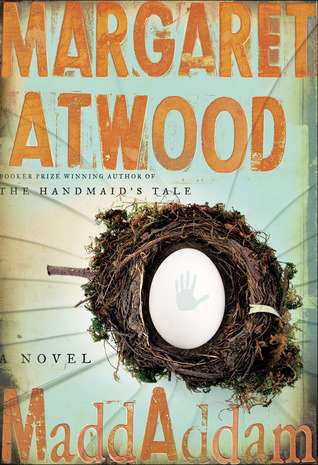
Finally in MaddAddam we rejoin our friend Jimmy, aka Snowman, aka Snowman-the-Jimmy. I became quite attached to Jimmy and I was happy with how this installment treated him. However, I have to say I was expecting more of a grand "answer" after all the buildup in the first two novels. It was a lovely wrap-up but it didn't have the profound impact that the other two novels did.

Atwood darkly calls her work not science fiction, but "speculative fiction," and she is often much too accurate. The world of this trilogy is wrought with dramatically deadly weather, food that is created solely in labs, and economics reminiscent of the Middle Ages. I don't claim to know anything about, say, bioengineering, but she presents the events in the novel in such a way that they seem not only plausible but probable.

Perhaps you don't want to ask yourself whether the world would be better off without humans. But if you can stomach the thought, you'd probably enjoy this trilogy.

Sunday, March 9, 2014

Making Pasta: Egg, Flour, and Sweat

I had mentioned to a friend and fellow amateur chef once that I had never made fresh pasta. This friend happens to be Italian and therefore a natural-born pasta maker. So when Ron and I decided to get together with Alan and his girlfriend Kristen for dinner one night, we realized it was the perfect opportunity for me to learn a new skill.

Master 10 New Recipes:

1. Pasta with Mushrooms and Thyme
2. Sriracha Peanut Butter Tofu
3. Fresh Pasta

I'll say this: it was hard work. Admittedly, we were cooking for six people, which is a lot. And I would probably improve my speed with more practice. But still, I'd say it took me about two hours total.

Was it worth it? Well, yes. Learning something new - especially in a subject you are passionate about, like me with cooking - is almost always worth the work. And yes, fresh pasta tastes better and in a way is a totally different experience than dried pasta. But like I told Ronnie, I probably won't be making it for him at home anytime soon.

Okay, onto the lesson.

First, clear off a large portion of your counter and get some eggs and some flour together. Honestly I don't think Alan measured anything but just kind of knew. Mario Batali suggests 3 1/2 cups flour and 4 eggs for 4 servings of pasta, so I'm sure it was somewhere around there.

Sift the flour onto a large cutting board or straight onto the counter into a mound, then dig out a little bowl to crack the eggs into (as pictured below). Next start whisking the flour into the eggs with a fork. Be careful not to break the rim of the flour bowl. After what seemed like about an hour of me doing this slowly Alan assisted me and finished whisking in about two seconds. One thing he did which I didn't think to do was actually move the flour to create a smaller bowl shape.

 Note the third ingredient in making pasta dough: wine.
Eventually it will come together into a knead-able dough. Knead it by gathering it together with your fingertips and then pressing it with the palms of your hands. At first the dough will likely be horribly sticky and half of it will be stuck to your fingers. You can resolve this by slowly kneading in more flour.


You should knead for a solid 5-10 minutes until the dough is elastic and "tacky" but no longer too sticky to handle. Then wrap the dough in plastic wrap and let it rest for 20 minutes at room temperature.

Now is a great time for a glass of wine and perhaps an appetizer.

Next, rolling out the dough. I assume every pasta maker and every noodle shape is different, so don't take this as an instruction manual. But what we did was cut about 1/4 or 1/5 of the dough off of the total, roll it out, and put it through the machine once on each thickness setting until we got to the thickness we wanted.

You can see it starts out fairly thick and short:


And ends up looking something like this:


Once it is at the desired thickness you can cut it into whatever noodle shape you choose. I believe we did a fettuccini noodle as that was one of the settings on their machine.

Cook time varies depending on the noodle, but it is much shorter than with dried pasta. I think for the fettuccini noodles we cooked them for about three minutes.

After all this work I had built up quite an appetite, and we all dug into the pasta before I had a chance to get a good shot. Here's what was left over:


Clearly it was delicious. This is something that every aspiring chef should know and I am glad to have this skill under my belt.

But I am also glad that someone invented dried pasta.

Tuesday, January 28, 2014

Kimchi, Bibimbap, and Metal Chopsticks

Living in Fairfax, Virginia has many advantages. Not only are we close to several metropolitan areas that have great restaurants, we also have a few of our own. Fairfax especially has a great Korean culture (though not as great as neighboring Annandale). So after living here for over four years it was about time we tried Korean for ourselves.

Try 26 New Foods:

1. Bison
2. Ethiopian Food
3. Oysters Rockefeller
4. Shark
5. Escargot
6. Frog legs
7. Chicken and Waffles
8. Hemp Vodka
9. Uni 
10. Beef Tongue
11. Amaranth
12. Bibimbap
13. Kimchi

I discovered Meega Korean BBQ through my close and personal friend, Yelp.com. Otherwise I probably never would have ventured into a restaurant that was in a strip mall next to an abandoned-K-Mart-turned-hooligan-hangout. It was my first time trying Korean, so luckily we were there with a friend who'd had it before. He recommended either the bulgogi or the bibimbap. Having recently entered a phase where I'm obsessed with runny egg yolks, I went with the latter.


Bibimbap is a rice dish usually topped with vegetables, chili paste, sliced meat and a fried egg. You mix the ingredients together before eating and the egg and chili paste create sort of a sauce. Mine was served in a hot stone bowl which kept it hot and delicious throughout the entire meal.

The taste was what I had been hoping for: full of that savory umami flavor. The ingredients are fairly simple on their own- delicious roasted veggies, nice tender beef, rich egg yolk. The chili paste is quite spicy but you can use your own discretion when mixing it in.

I also enjoyed the presentation of the meal which started with the presentation of many sides to share at the table. Most of them were kimchi, which I always thought only applied to cabbage but can apparently mean any fermented vegetable. I will admit that I did not like possibly any of them, but I enjoyed the opportunity to try so many different things. Some were unexpectedly crunchy or cold or hot- we just had no idea what we were trying. And that was half the fun.


If I had one complaint it would be the metal chopsticks! I understand that this is the traditional way to eat Korean food and read up on some reasons- more hygienic; lack of wood in Korea; I even read one article that claimed it started as a way for royalty to know whether their food was poisoned (as certain metals would react to certain poisons). I'm sure it would just take some getting used to, but I found them slippery, hard to use, and adding a slight tang to the food. Not to mention I kept leaving them against my hot stone bowl which meant they were hot when I picked them up again.

All in all I would definitely eat bibimbap again, and perhaps go back to try some other dishes. Although just thinking about all that MSG is making my heart race already.


Sunday, January 12, 2014

Meat-Less Mondays: Sriracha Peanut Butter Tofu

Maybe tofu isn't the most carnivore-friendly food for those transitioning into eating less meat. But if you are adventurous enough to try tofu for the first time, this is a great recipe to do it with. The texture of the tofu is crispy and fluffy, and the flavorful sauce would taste good on really anything.

Sriracha Peanut Butter Tofu
(based on this recipe)

Ingredients:
14 oz. extra firm tofu
1 tablespoon peanut oil
4 garlic cloves, sliced lengthwise
Piece of ginger root, sliced
1/4 cup diagonally sliced green onions
2 cups cooked rice

Sauce Ingredients:
3 tablespoons soy sauce
3 tablespoons rice vinegar
2 tablespoons smooth peanut butter
2 tablespoons vegetable stock or water
1 tablespoon Sriracha (more or less to taste)

Instructions:
1. Drain and blot the tofu to remove as much water as possible (further instructions here). Cut tofu into lengthwise strips about 1 inch wide.
2. Whisk together the soy sauce, rice vinegar, peanut butter, stock, and then add the Sriracha Sauce. Whisk thoroughly until peanut butter is mostly incorporated.
3. Heat you pan. Then add the peanut oil and heat about 30 seconds more. Add the sliced ginger and garlic and cook just until they are fragrant and slightly golden (about 30 seconds); then remove and discard. 
4. Add tofu pieces to the hot oil. Lower heat to medium high and cook, flipping occasionally, until the tofu is brown on both sides, about 7-8 minutes. 


5. When the tofu is done, add the sauce to the same pan and turn heat to low. Cook until the sauce thickens slightly and coats the tofu. Remove pan from the heat, transfer tofu pieces to a plate and pour sauce over the tofu and the rice. Garnish with green onion slices. Serve immediately.
It was so good I forgot to take a picture before taking a bite: 


Saturday, January 11, 2014

White Noise, & Writing from the Sentence Up

You know that feeling you get about an author or from reading the synopsis of a book where you just know you are going to like it? And you know that feeling you get while reading said book where you keep thinking, there's something about this that I love, even though I can't quite put my finger on it? That's how I felt about this book. Somewhat like Tender is the Night, it was a little slow to get through, but there was just something that clicked with me.

(#1) Read 26 Books
1. Firestarter by Stephen King
2.World War Z by Max Brooks
3. Where Men Win Glory by Jon Krakauer
4. Red Hook Road by Ayelet Waldman
5. A Wolf at the Table by Augusten Burroughs
6. The Fault in Our Stars by John Green
7. Open House by Elizabeth Berg
8. The Golden Compass by Philip Pullman
9. The Subtle Knife by Philip Pullman
10. The Amber Spyglass by Philip Pullman
11. White Noise by Don DeLillo


We saw Don DeLillo speak at the National Book Festival. Admittedly I had never heard of him before and we were just there waiting for Margaret Atwood to come out (as I will describe in greater detail in my Margaret Atwood entry, coming soon!). But what a firecracker this guy was! In his late seventies, still gallivanting about the country to speak about his novels to readers who were surprisingly enraptured by him.

Many, many people stood up at the microphone (a feat DeLillo himself was unable to do, instead sitting and having a mic held up for him) and testified about how White Noise, Cosmopolis, and Underworld had changed their lives. Seemingly all were able to make clever inside jokes that drew harty laughs from  DeLillo and other fans.

I had to join this world.

So, a few days later at the library, I browsed under Don DeLillo and found White Noise. There was almost no description on the jacket, just a series of pictures that appeared to be about chemical spills and planes crashing. So I picked it up.

One thing I remember DeLillo saying in his interview, which I think really helps explain what this book is like, is that he writes from the sentence up. He has written whole books inspired by one really good sentence.

What this means for his novels is that if you pause and read each sentence slowly, carefully and thoughtfully, you will enjoy some excellent writing. The flip side of course being that this novel took me a really, really long time to read.

Still, I enjoyed the sardonic, almost Vonnegutian (ALMOST being the key word) postmodern humor of this story, centered around Jack Gladney the Hitler expert who doesn't speak German. It's about the modern family, made up of children of different marriages and the scattered trail of ex husbands and wives. Its about chemical spills and technological advances and simulations replacing reality.

Mostly, though, its about death. White Noise deals with death in an obsessive, frank and fascinating way. It acknowledges that death has a way of taking over life. And that none of our technological advances will ever be able to beat it.

Obviously when I say this novel is all about the sentences, I have to produces some examples. So I'll leave you with this one. If you're intrigued, this book is for you.

“I've got death inside me. It's just a question of whether or not I can outlive it.”


Tuesday, December 31, 2013

Why You Should (and How to) Make A New Year's Resolution

With the New Year upon us, I'm sure a lot of you are considering and probably also scorning the idea of making a New Year's Resolution for 2014. I'm here to tell you that you should do it. But first, you should change the way you think about it.

As you probably know if you are reading this at all, a year and a half ago I created a "25 for 25" list for myself, of 25 things I wanted to do while I was 25. And as you also probably know, I consider it one of the best things I ever did for myself. I created another list when I turned 26 this May.

The difference between these lists and a traditional New Year's Resolution is that my intent is not to change or better myself. I am not focusing on habits that I want to get rid of or fixing things that I don't like about myself.

I am focusing on making each year, each day, each minute the best that it can be.

Instead of focusing on abstract ideas, I am focusing on real, tangible, achievable goals that I write down, and then (mostly) check off.

So, do this for yourself.

What's something that you would love to achieve for yourself next year? Something that will challenge you, but that you can totally achieve if you put your mind to it? Maybe something that you will impress everyone, including yourself, by doing? Something that will make you look back on 2014 and say, "That was the year I did ______."

2013 was the year I visited Puerto Rico, the Virgin Islands, and the Bahamas all for the first time. It was the year I got my first commissioned work of poetry published. It was the year I reached 5,000 views on this blog.

Next year I'll get married, that will be a big one. But I'll also write one work of fiction, from beginning to end. I'll read a few more books on my endless list (11 to go, to be exact). With your help I'll reach 10,000 views on this blog.

I'll volunteer, I'll cook, and I'll continue to do yoga, because I love all of those things. I'll thank myself for creating and then completing the challenge. Or, I'll forgive myself for leaving one or two things on the list without a check mark. I'll note it, and I'll move on to the next day.

Do this for 2014, and you'll be amazed at how time ceases to slip between your fingers. Take hold of the year! Make it one for the record books!

Okay, I'm done preaching. What do I know, anyway, at 26? But I do hope you'll take my advice, in whatever form that advice may resonate with and or work for you. Here are some ideas to get you rolling:

1. Read a book. ONE book. Finish it. Slam it shut. Reward yourself.
2. Try a new restaurant. Just one, or one a month, or once every meal. Or just turn off the TV while you eat. You may realize you actually enjoy the taste of food.
3. Take a class. Whether its yoga or cake decorating, focusing on nothing but your own personal growth for a length of time will help you remember what it is you're passionate about.
4. Do something that scares you. Take a bus somewhere, by yourself. Pick up a spider and let him outside instead of squishing him. Jump out of an airplane. Whatever it is, you'll probably feel horrible right before doing it and then great right after. It's addicting.
5. Do something for someone else. I made a point to start volunteering with the list. Volunteer your time to any cause you are passionate about. Or just make a point to spend more time with your family, or be nicer to people you see every day. You'll feel better about yourself without even realizing why.

I'm excited for 2014 and I hope you are too! I hope to hear all about your resolutions and look forward to sharing my own successes (and failures) in the year to come. Happy New Year!

Tuesday, December 3, 2013

Beef Tongue: Like Chewing Your Own Tongue

Maybe we celebrate too much. Or, maybe the rest of your aren't celebrating enough. But on November 23rd we had another anniversary to celebrate- it was one year since Ronnie proposed.

Since he took me out for our anti-versary it was my time to pull off a surprise. I chose Oyamel, a Mexican tapas restaurant by DC-famous chef Jose Andres. I knew Ronnie had been dying to try it.

(#2) Try 26 New Foods:

1. Bison
2. Ethiopian Food
3. Oysters Rockefeller
4. Shark
5. Escargot
6. Frog legs
7. Chicken and Waffles
8. Hemp Vodka
9. Uni 
10. Beef Tongue
11. Amaranth

The good thing about tapas for us (other than everything, who doesn't love tapas) is that the tiny sizes embolden us to try new foods. Its only two bites, and if you don't like it, there are plenty of other things to try. With that in mind, we ordered a beef tongue taco.

We've seen plenty of people eat beef tongue on TV, though it usually involves some kind of dare, so we figured it couldn't be that bad. Its not really an "organ" organ, right? We like beef, right?

Truthfully it wasn't that bad.


If I had to compare it to something I'd say it was like a really cheap and ill-prepared steak. It definitely tasted like beef. But the texture was not great and the flavor was more...gamey? More like beef than I like to taste in my beef.

Ronnie "held his tongue" (see what I did there?) and did not mention until after we finished eating that the texture reminded him of how it feels to chew on your own tongue. Except instead of stopping and saying "ow" you just kept on chewing and eventually swallow.

I probably just ruined the whole trying-beef-tongue thing for everyone. Sorry. You're not missing too much.

What I was most looking forward to was the ceviche, something I love but will only order from a place I know can do it right. This one was done right. We had ceviche de atĂșn, which had tuna, avocado, scallions, and another new food- amaranth.

I wish I took a picture but I couldn't stop eating because it was so delicious. Here is a nice picture of amaranth courtesy of a Google image search:


It is a tiny grain, even smaller than quinoa. In this case it was fried so it didn't add much other than a crispy texture. But I certainly didn't mind it.

One thing I DID take a picture of was this miracle of science:


It's a margarita, but that is not just ordinary foam on the top. That, my friends, is "salt air." A delicious salty foamy creation made by bartending geniuses so that with every little sip of margarita you get a burst of salty goodness.

No more licking your glass like a savage. This is the wave of the future.

Also, if you're going to have a $12 margarita, you might as well do it right.

All in all it was a great meal, capped off with one of the best tres leches cakes- nay, one of the best desserts- we'd ever had. A bit pricey, but a good place to celebrate your engage-iversary or your anti-versary or your Tuesday-iversary or whatever else you may be celebrating this week.


Thursday, November 21, 2013

His Dark Materials of Confusion

I decided to read the His Dark Materials series purely for the controversy that I heard about it when The Golden Compass movie came out. Upon finishing the series I found myself in the midst of a controversy of my own- did I like these books or not? And what on earth are they supposed to mean? Let's try and sort this out together.

(#1) Read 26 Books
1. Firestarter
2.World War Z
3. Where Men Win Glory
4. Red Hook Road
5. A Wolf at the Table
6. The Fault in Our Stars
7. Open House
8. The Golden Compass
9. The Subtle Knife
10. The Amber Spyglass

Essentially, as I understand it, the series is about Adam and Eve, Original Sin, and God being an evil dictator who punishes people with Death just for being alive and enjoying life. I guess I can see how some people might find that controversial.

According to Wikipedia Pullman meant it to be an inversion on Paradise Lost in which humanity's fall from Heaven was actually their greatest accomplishment, not their greatest sin. I did not pick that up in my own reading but it does make sense in hindsight.

For children's novels they are surprisingly difficult to explain (and understand). Basically there is this thing called Dust which is only attached to adults and is therefore believed to be Original Sin. Certain groups of people want to eliminate the Dust which they believe would allow them to live forever. The church, which runs the government, wants to stop them from doing this. But in order to accomplish their respective missions both groups must perform horrible acts on children.

At least I think that is what happens.


In The Golden Compass we meet the main character Lyra and her "daemon" (who appears to be her soul manifested in animal form) Pantalaimon. At first Lyra seems to stumble upon the action of the novel but eventually we realize that she is central to the world's problems and solutions somehow. Lyra's Uncle Lord Asriel and her guardian Mrs. Coulter are two of the people trying to destroy the Dust.  In fact Lord Asriel's plan is to find "the Authority" (aka God) and kill him so that humans can be free of his tyrannical rule.


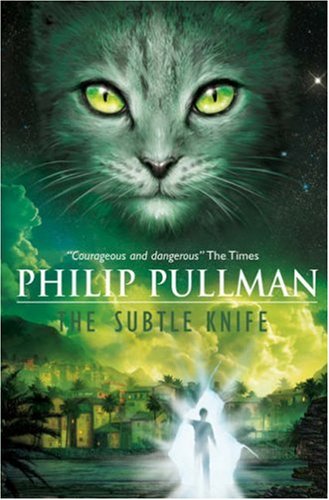
In The Subtle Knife, Lyra travels to another universe to try and follow and possibly stop Lord Asriel (possibly, because she is not really sure yet whether Dust is evil; much like you, as the reader, is not really sure of anything at this point). She meets up with Will, who has fled his own world. Will accidentally (though maybe it is his destiny) becomes the bearer of the Subtle Knife, which enables him to cut pathways between the many different parallel universes.


Finally comes The Amber Spyglass, the longest of the three though perhaps not quite as frustrating as The Subtle Knife. In the one storyline that I remained interested in, Lyra and Will travel to the land of the dead with the intention of finding and speaking with her friend Roger whose death Lyra feels responsible for.

I am not sure what I was expecting when I picked these books up. Something a bit more straightforward, perhaps. Or at least more allegorical. I can understand why Pullman didn't want to come out and say anything against Christianity but to me his points were almost entirely lost. Obviously in a world where everyone is trying to kill God and/or erase Original Sin some point is being made against organized religion. I just couldn't quite put my finger on what that point was while I was reading.

Another criticism that I read and agree with (though again, didn't pick it up in the book on my own) was that for an anti-religion series the characters seem to find their own religion towards the end. They begin almost worshipping the Dust and finding some sort of inner spirituality through Love. But he never quite develops this new religion so the reader is left wondering what makes it better than the old one.

All in all I would say this series is not worth the time it took me to read (which was a surprisingly long time for a children's series). Although if anyone else has already read them I'd be interested in discussing further. Maybe I'm just missing something.


Monday, November 11, 2013

"Meat-Less" Mondays: Pasta with Mushrooms and Thyme

There are about a hundred reasons why people chose a vegetarian diet, including a passion for animal rights, to improve their health, and (my personal favorite) to reduce their carbon footprint. I won't argue particulars with you, but these are reasons why this choice works for some people.

That being said, there are a hundred reasons why people chose NOT to eat a vegetarian diet, including religious justifications, health reasons (yes it makes sense for both!), and believing that global warming is just liberal propaganda. Or there are people like me who love food too much to limit themselves.

More importantly, I'd like to believe that a major reason people eat meat with every meal is that they simply don't know how NOT to eat meat; they don't have the information or the access or the time to come up with healthy, filling, and tasty vegetarian meal alternatives. I include myself in this last category, which is why I decided to make

(#5) Eat Vegetarian One Day a Week

part of my list. I have no intention of depriving myself of the occasional burger, but I do know that eating less meat is better for me and better for the environment. So I want to use the list to push myself to come up with more creative and delicious vegetarian meals, and hope that sharing them with you will help those of you who also fit into the I-would-if-I-could category.

Why not also join forces with the Meatless Monday movement. Though we're not going meatless, just meat-less.

This first recipe is from Martha Stewart, and I guaranteed to fill up and satisfy the most skeptical of carnivores: provided they like mushrooms, of course.


This was my first time working with dried porcini mushrooms. While they were rehydrating, they gave off
such a sumptuous, savory smell that if I told you I was cooking beef, you would have believed me.


Pasta with Mushrooms and Thyme

Ingredients:
  • 12 ounces gemelli or other short twisted pasta
  • 1 ounce dried porcini mushrooms (about 1 cup), rinsed in cold water
  • 4 tablespoons butter
  • 1 shallot, minced
  • 1/2 cup dry white wine, such as Sauvignon Blanc
  • 10 ounces button mushrooms, trimmed and thinly sliced
  • 8 ounces shiitake mushrooms, stemmed and thinly sliced
  • 1 tablespoon fresh thyme, chopped
  • 1/4 cup grated Parmesan, plus more for serving
Instructions:

1. In a large pot of boiling salted water, cook pasta until al dente; drain, and return to pot. Set aside. While pasta is cooking, in a small bowl, soak porcini in 1 1/2 cups hot water until tender, at least 15 minutes. (Prepare yourself for their aggressively delicious aroma.)

2. Meanwhile, melt 1 tablespoon butter in a large skillet over medium heat. Cook shallot 3 to 4 minutes until soft. Add wine and reduce, 3 to 5 minutes.

3. Add button and shiitake mushrooms. Cook over medium-high heat, stirring occasionally, until mushrooms are tender and begin to brown, 6 to 8 minutes.

4. Add porcini and their soaking liquid (leaving any grit at the bottom of the bowl) and thyme to skillet. Cook, stirring occasionally, until liquid reduces by half, 2 to 4 minutes. Transfer noodles to mushroom mixture. Add Parmesan and remaining butter, and toss to combine. Season with salt and pepper, and serve with more Parmesan.


As usual, serve anything this dangerously delicious with a salad to distract your tastebuds.

Enjoy! Stay tuned for more "Meat-less" Monday recipes, or check out my similarly-themed Pinterest board.